

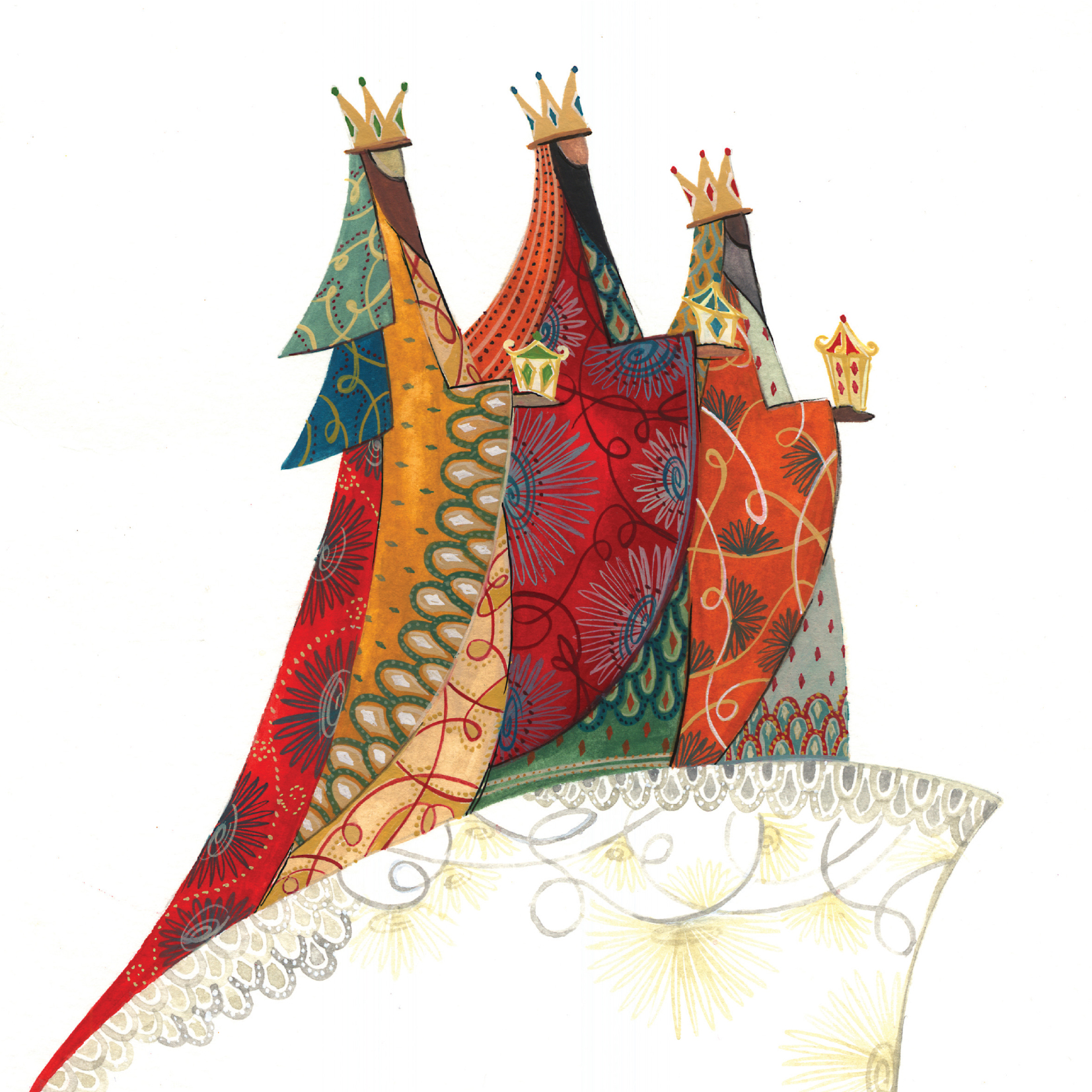
 There are stories all over the world pertaining to ‘Christmas’. It is said that ‘Jesus is the reason for the season’, but most of us know Jesus was not born on December 25th. There are stories about the 3 wise men, the shepherds, the star, etc. What will be noted today is a story I came across in regards to the 3 Wise Men and the gifts they offered the baby Jesus.
I ran across this article in my drawer of ‘throw things in.’ The author apparently is anonymous as there was nothing on the sheet of paper to say who wrote it. However, I find it very interesting as I hope you will as well.
 FRANKINCENSE AND MYRRH
Frankincense and myrrh are two of the gifts offered to the Child Jesus by the wise men from the East (Matthew 2:11). In ancient times these items were valued at their equivalent weight in gold, thereby limiting their possession to kings, priests and only the most wealthy; hence, they were a fitting gift for the Christ.
Large camel caravans followed several routes across the Arabian peninsula carrying the frankincense and myrrh to the ancient seaports of the Mediterranean Sea, and traveling an average of twenty miles per day. One of the most famous, the Frankincense Trail, is probably the route followed by Lehi after his departure from Jerusalem. There is evidence that one trail led across the Empty Quarter, a most desolated and still largely unexplored desert region of southern Saudi Arabia. The journey was nothing less than hazardous; the caravan faced the perils of extreme heat, fierce sandstorms, scarcity of water and attacks by brigands. They were additionally required to pay tolls to the various tribes whose lands they crossed. For those caravans that never completed their journey, the sands of the desert soon covered all evidence of what had happened.
Since ancient times frankincense, more specifically known as olibanum from its Arabic name, “al laban,” has served for embalming, to stop bleeding, to heal wounds, for paralysis, as an antidote for poisons, to ease stress, improve heart rate, breathing, and blood pressure, relieve pain, boost the immune system, to treat dry skin, reverse signs of aging, and today – to fight cancer, and as an incense, especially in religious services. Quantities of it were discovered in the tomb of King Tutankhamen. Olibanum was greatly valued by the ancient Jews, Greeks and Romans.
Myrrh has been used since ancient times as a stimulating tonic, an ingredient of perfumes and cosmetics, an ointment, a medicine for stomach ailments, an incense and especially in embalming. Today it serves mostly as an antiseptic in mouthwash and dentifrice and as a healing salve.
Frankincense and myrrh are fragrant, or aromatic, gum resins obtained from trees. Frankincense is derived from two species of trees of the genus Boswellia, a low, many-branched tree which lacks a central trunk so that it looks more like a shrub. It commonly grows from six to fifteen feet in height. Myrrh, which derives its name from the Hebrew or Arabic word for ‘bitter’ is obtained from the Commiphora abyssinica tree. This genus has a central trunk which sometimes reaches one foot in diameter. Both the Boswellia and the Commiphora abyssinica possess dark green, serrated leaves and are in foliage following the rainy season. Both are also native to two areas of the world: the southern Arabian peninsula and the horn of Africa (Somalia).
A gum resin consists of thick liquids which are secreted or extracted from a plant and which harden naturally. The gum resins of frankincense and myrrh are obtained by cutting and peeling the bark in several places, which permits the resin to exude. It then hardens upon contact with the air. Generally, this harvest takes place in the late spring or early summer.
The hardened frankincense resin consists of semi-transparent, yellowish drops, called “tears”, which are broken up for use. Myrrh, which has a bitter, pungent taste, ranges in color from yellowish brown to reddish brown. As incense, both are placed on hot charcoal, where they readily burn. The price of these commodities fell drastically and forever during the time of the Roman emperors when Dhows (sailing ships) began to take advantage of the monsoonal air currents on the Red Sea and brought vast quantities of Frankincense, myrrh and other spices to the Mediterranean world safely and in record time.
As stated above, these were two very precious oils to the people of biblical times. It is interesting to know that they are still as precious today and both are used as methods for the Natural Healing of the body.
I hope you enjoyed this read. For more information – do the research.
I WISH YOU ALL A VERY HAPPY CHRISTMAS AND HOPEFULLY A PROSPEROUS NEW YEAR!
ISN’T GOD AMAZING?
 FYI-HEALTH TALK